Every Cup Has a Story
From the misty mountains of China to the vibrant tea gardens of India and the timeless afternoon teas of England, discover how tea has shaped cultures, traditions, and daily life across the globe.
A World United by Tea
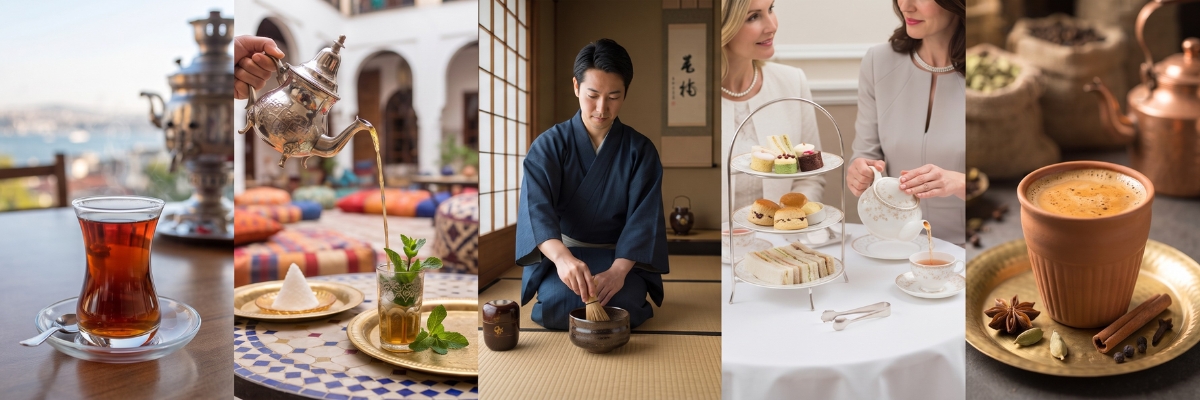
Tea is one of the world’s most cherished beverages, enjoyed by billions of people every day. Yet every country has developed its own unique way of growing, preparing, and celebrating tea. Some cultures gather for elaborate tea ceremonies, while others share tea as a symbol of hospitality, friendship, or family.
Across continents, tea tells stories of ancient trade routes, mountain gardens, royal traditions, and everyday rituals. Although the leaves may come from the same remarkable plant—Camellia sinensis—each region has transformed tea into something uniquely its own.
Join us on a journey around the world as we explore the people, places, and traditions that have shaped tea into the global treasure it is today.
A Journey Through the World of Tea
Tea is far more than a beverage—it’s a reflection of history, culture, and tradition. Across the globe, generations have cultivated unique ways of growing, preparing, and sharing tea, creating customs that continue to bring people together today.
On this journey, you’ll discover the fascinating stories behind some of the world’s most celebrated tea-producing regions. Explore the origins of iconic teas, learn about traditional brewing methods and tea ceremonies, uncover the customs that make each culture unique, and meet the signature teas that have become symbols of their homeland.
Whether you’re discovering tea for the first time or deepening your appreciation, each destination offers a new perspective on one of the world’s oldest and most treasured drinks. Let the journey begin.
China
茶 (Tea)
The Birth Place of Tea
Origin & History
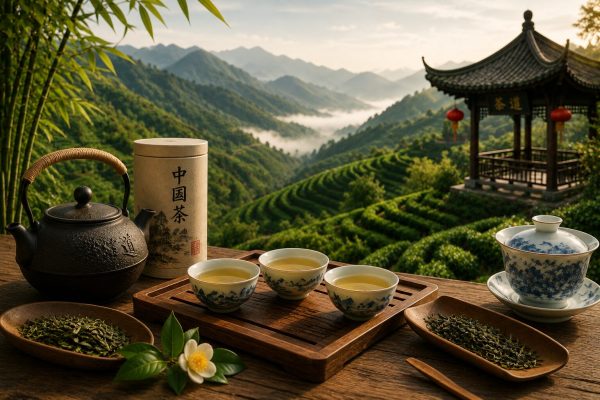
China is widely recognized as the birthplace of tea, with a history that spans more than 4,000 years. According to Chinese legend, tea was discovered in 2737 BCE when leaves from a wild tea tree drifted into the boiling water of Emperor Shen Nong. Whether legend or history, tea quickly became an important part of Chinese culture, evolving from a medicinal drink into a symbol of hospitality, scholarship, and daily life.
Over centuries, tea cultivation spread across China’s diverse landscapes, with each region developing its own growing techniques, processing methods, and distinctive styles. Today, China remains one of the world’s largest tea producers and is celebrated for its remarkable diversity of teas.
Tea Tradition
In China, tea is much more than a beverage—it is a way of bringing people together. Serving tea is a traditional gesture of respect, gratitude, and welcome, often shared with family, friends, and guests. Tea also plays an important role in celebrations, ceremonies, and everyday conversations.
One of China’s best-known traditions is Gongfu Cha, often translated as “making tea with skill.” This mindful brewing method uses small teapots or gaiwans and multiple short infusions to reveal the changing flavours and aromas of high-quality loose-leaf tea. Rather than rushing the process, Gongfu Cha encourages appreciation of the tea’s craftsmanship and character.
Signature Teas
China is home to an extraordinary range of teas, many of which have become famous around the world. Some of the country’s most celebrated teas include:
- Longjing (Dragon Well) – A renowned green tea known for its smooth, chestnut-like flavour.
- Bai Hao Yin Zhen (Silver Needle) – One of the finest white teas, prized for its delicate sweetness.
- Tie Guan Yin – A famous oolong tea with floral aromas and a silky texture.
- Pu-erh Tea – A fermented tea from Yunnan Province, appreciated for its rich, earthy character and aging potential.
- Jasmine Tea – Green tea naturally scented with fresh jasmine blossoms, offering a fragrant and refreshing cup.
- Keemun Black Tea – A refined black tea known for its smooth body and subtle notes of cocoa and dried fruit.
Tea Regions
China’s vast geography creates ideal conditions for producing many different styles of tea. Some of the country’s most important tea-growing regions include:
- Zhejiang – Famous for Longjing (Dragon Well) green tea.
- Fujian – Renowned for white teas, oolong teas, and jasmine tea.
- Yunnan – The birthplace of Pu-erh tea and home to ancient tea forests.
- Anhui – Celebrated for Keemun black tea and several traditional green teas.
- Guangdong – Known for distinctive Phoenix (Dan Cong) oolong teas.
Each region contributes unique flavours influenced by altitude, climate, soil, and traditional craftsmanship.
Did You Know?
China is home to some of the world’s oldest living tea trees. In Yunnan Province, ancient tea trees more than 1,000 years old continue to produce leaves that are carefully harvested for premium teas, connecting modern tea lovers with centuries of tea-growing history.
Experience Chinese Tea
From elegant green teas and delicate white teas to fragrant jasmine, complex oolong, and aged Pu-erh, China’s rich tea heritage offers something for every palate. Its centuries of craftsmanship continue to inspire tea lovers around the world and remain the foundation of many of today’s tea traditions.
Japan
茶 (Cha)
The Art of Tea
Origin & History
Tea was introduced to Japan from China centuries ago, where it was first enjoyed by Buddhist monks and members of the imperial court. During the twelfth century, Zen monk Eisai helped promote powdered green tea, which later became closely connected with meditation and Japanese cultural life.
Over time, Japan developed its own distinctive approach to tea cultivation and preparation. Green tea became the heart of Japanese tea culture, while carefully refined traditions transformed the preparation of tea into an expression of harmony, respect, purity, and tranquillity.
Tea Tradition
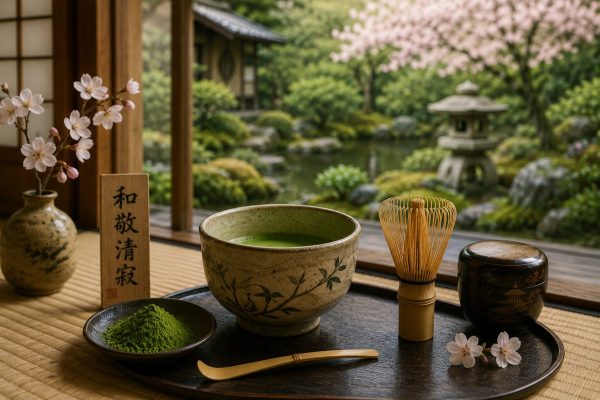
Japan’s most recognized tea tradition is Chanoyu, commonly known as the Japanese tea ceremony. The ceremony centres on the careful preparation and serving of matcha in a thoughtfully arranged setting.
Every movement—from cleaning the utensils to whisking the tea and presenting the bowl—is performed with purpose and attention. The ceremony is not simply about drinking tea; it encourages guests to appreciate the present moment, the surrounding environment, and the connection shared between host and guest.
Japanese tea is also part of everyday life. Sencha is commonly served at home, in restaurants, during meetings, and when welcoming visitors.
Signature Teas
Japan is celebrated primarily for green teas, each shaped by distinctive cultivation and processing methods.
- Matcha – Stone-ground powdered green tea with a rich vegetal flavour and smooth, creamy texture.
- Sencha – Japan’s most widely enjoyed green tea, known for its fresh, grassy character and gentle sweetness.
- Gyokuro – A premium shade-grown green tea with a deep umami flavour and refined sweetness.
- Genmaicha – Green tea blended with roasted rice, creating a warm, nutty aroma.
- Hojicha – Roasted green tea with a mellow, toasted flavour and reddish-brown infusion.
- Kabusecha – A partially shade-grown tea combining the freshness of sencha with some of gyokuro’s sweetness.
Tea Regions
Japan’s tea-growing regions are influenced by differences in climate, soil, altitude, and local craftsmanship.
- Shizuoka – Japan’s largest and most recognized tea-producing region, especially known for sencha.
- Uji, Kyoto – Famous for premium matcha, gyokuro, and centuries of tea-making tradition.
- Kagoshima – A warm southern region producing a wide range of green teas.
- Yame, Fukuoka – Particularly celebrated for high-quality gyokuro.
- Mie – One of Japan’s established tea-growing regions, known for sencha and kabusecha.
Did You Know?
Before harvesting premium teas such as matcha and gyokuro, Japanese tea plants may be shaded from sunlight for several weeks. This changes how the leaves develop, deepening their green colour and creating a smoother flavour with greater sweetness and umami.
Experience Japanese Tea
From the quiet precision of the matcha ceremony to a refreshing everyday cup of sencha, Japanese tea culture celebrates simplicity, craftsmanship, and mindful appreciation. Each cup reflects careful cultivation and a deep respect for nature, season, and tradition
Taiwan
茶 (Chá)
The Home of Exceptional Oolong
Origin & History
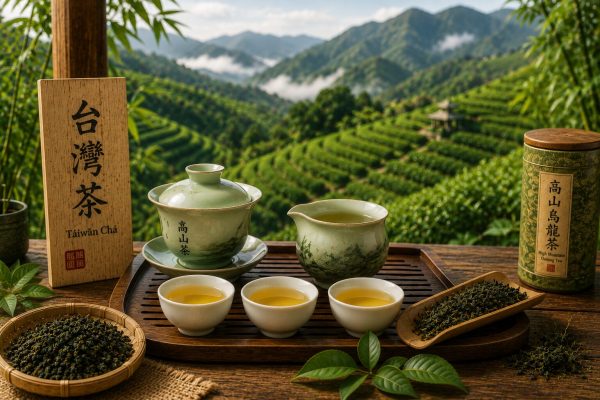
Although tea cultivation in Taiwan began several centuries ago, the island rose to international prominence during the nineteenth century. Fertile mountain soils, cool misty climates, and skilled craftsmanship created ideal conditions for producing teas of exceptional quality.
Today, Taiwan is celebrated for its premium high-mountain teas and world-famous oolongs, many of which are regarded among the finest teas in the world. The island’s dedication to quality, innovation, and traditional craftsmanship has earned it a respected place in global tea culture.
Tea Tradition
Tea plays an important role in Taiwanese hospitality and everyday life. Families and friends often gather around a tea table to enjoy multiple infusions while sharing conversation.
Taiwan is especially known for Gongfu Tea Brewing, a method that uses small teapots or gaiwans, carefully measured tea leaves, and several short infusions. Each infusion gradually reveals new aromas, flavours, and textures, allowing tea enthusiasts to experience the full character of the leaves.
Rather than rushing, Taiwanese tea culture encourages slowing down, appreciating craftsmanship, and enjoying meaningful moments together.
Signature Teas
Taiwan is internationally recognized for producing some of the world’s finest oolong teas.
- High Mountain Oolong (Gao Shan Cha) – Grown at high elevations, prized for its floral aroma and smooth finish.
- Dong Ding Oolong – A lightly roasted oolong with rich body and balanced sweetness.
- Oriental Beauty – Naturally sweet with notes of honey and ripe fruit.
- Alishan Oolong – A delicate high-mountain tea with creamy floral notes.
- Baozhong (Pouchong) – A lightly oxidized oolong known for its fresh, elegant aroma.
Tea Regions
Taiwan’s mountainous landscape creates ideal growing conditions for premium tea.
- Alishan – Famous for high-mountain oolong teas.
- Lishan – One of Taiwan’s highest tea-growing regions.
- Shan Lin Xi – Produces fragrant and complex oolongs.
- Nantou County – Home to the celebrated Dong Ding tea region.
- Pinglin – Known for Baozhong tea.
Did You Know?
Many of Taiwan’s finest teas are grown at elevations above 1,000 metres (3,280 feet). The cool temperatures, mountain mist, and slower leaf growth contribute to their smooth flavour, delicate sweetness, and remarkable aroma.
Experience Taiwanese Tea
Taiwan’s tea culture combines centuries of tradition with remarkable innovation. Whether enjoying a fragrant high-mountain oolong or a carefully brewed Gongfu session, every cup reflects the island’s dedication to quality, craftsmanship, and the art of tea.
India
चाय (Chai)
A Land of Tea, Spice & Tradition
Origin & History
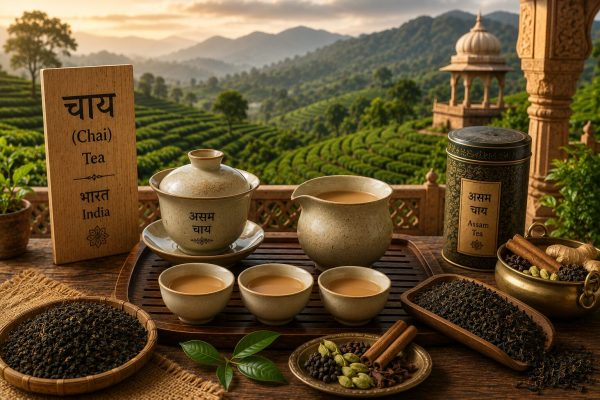
Although indigenous tea plants grew wild in northeastern India for centuries, large-scale tea cultivation developed during the nineteenth century. The discovery and cultivation of native Assam tea plants helped establish India as one of the world’s great tea-producing nations.
From the lush plains of Assam to the mist-covered Himalayan slopes of Darjeeling and the Nilgiri hills of southern India, dramatically different landscapes produce teas with remarkably distinct personalities.
Tea Tradition
In India, tea is an everyday ritual and an expression of hospitality. Offering a guest a cup of chai is a familiar gesture of welcome, while tea stalls serve as lively gathering places where people meet, talk, and pause throughout the day.
Perhaps the most iconic preparation is Masala Chai, traditionally made by simmering black tea with milk, spices, and often sugar. Recipes vary widely between families and regions, creating countless interpretations of this beloved drink.
Signature Teas
असम चाय — Assam Chai | Assam Tea
A robust black tea from northeastern India, celebrated for its deep colour, full body, and rich malty character. It is frequently used in breakfast blends and chai.
दार्जिलिंग चाय — Darjeeling Chai | Darjeeling Tea
Grown along the Himalayan foothills, Darjeeling is prized for its delicate aroma and complex character, which can range from fresh and floral to the distinctive muscatel notes associated with certain harvests.
नीलगिरि चाय — Nilgiri Chai | Nilgiri Tea
Cultivated in the highlands of southern India, Nilgiri tea is known for its fragrant aroma, smooth character, and bright, refreshing cup.
मसाला चाय — Masala Chai | Spiced Tea
A beloved Indian preparation combining black tea with aromatic spices such as cardamom, ginger, cinnamon, cloves, and black pepper. Recipes differ from household to household, making chai as diverse as India itself.
Tea Regions
Assam is famous for powerful, malty black teas grown in the warm Brahmaputra Valley.
Darjeeling produces highly prized teas in cool Himalayan foothills, with distinctive characteristics changing throughout the harvest seasons.
Nilgiri in southern India is known for fragrant, smooth teas grown among the beautiful Blue Mountains.
Kangra in northern India has a smaller but historic tea tradition, producing distinctive black and green teas.
Did You Know?
The word “chai” already means “tea.” So when we say “chai tea” in English, we are essentially saying “tea tea.” 😄 In India, chai can simply mean tea, while masala chai specifically refers to tea prepared with a blend of aromatic spices.
Experience Taiwanese Tea
From the bold maltiness of Assam and the refined character of Darjeeling to the fragrant hills of Nilgiri and the warming spices of Masala Chai, India offers an extraordinary world of tea. Each region tells a different story, yet they are united by a culture in which sharing a cup of chai remains one of life’s simplest and most enduring traditions.
Sri Lanka
තේ — Tē
The Island of Ceylon Tea
Origin & History
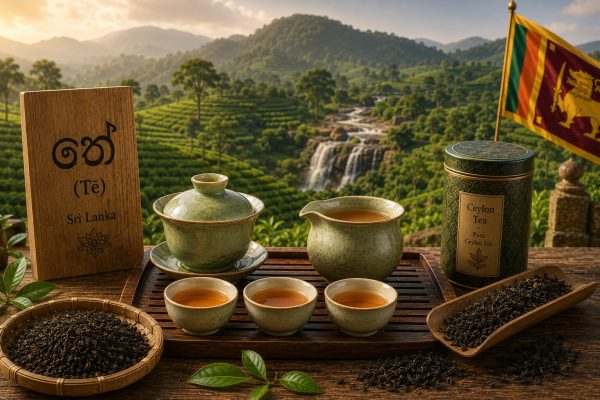
Sri Lanka, historically known as Ceylon, has become one of the world’s most celebrated tea-producing countries. Its tea industry began to flourish in the nineteenth century after coffee plantations were devastated by disease and many estates turned to tea cultivation.
The island’s dramatic mountains, tropical climate, and varied elevations created remarkable growing conditions. Today, the name Ceylon Tea is recognized around the world, with teas ranging from light and delicate to bold, bright, and full-bodied depending on where they are grown.
Tea Tradition
Tea is deeply woven into everyday Sri Lankan life and hospitality. A freshly prepared cup is commonly offered to guests and enjoyed throughout the day, often with milk and sugar alongside something sweet or savoury.
Beyond the cup itself, tea has shaped entire communities and landscapes. Hillsides covered with carefully cultivated tea bushes have become one of Sri Lanka’s most recognizable sights.
Signature Teas
තේ — Tē | Ceylon Tea
The internationally recognized name for teas produced in Sri Lanka. Ceylon teas vary considerably depending on elevation and growing region.
ඌව තේ — Uva Tea
Known for its distinctive aromatic character and brisk, lively cup, particularly during certain seasonal harvests.
නුවරඑළිය තේ — Nuwara Eliya Tea
High-grown tea with a lighter, more delicate character and refined fragrance.
දිඹුල තේ — Dimbula Tea
A classic high-grown Ceylon tea appreciated for its bright character and balanced flavour.
Tea Regions
Nuwara Eliya — High-elevation teas with delicate, refined characteristics.
Uva — Famous for distinctive seasonal teas with aromatic complexity.
Dimbula — Known for bright and balanced high-grown teas.
Kandy — One of Sri Lanka’s historic tea-growing areas.
Ruhuna — Lower-elevation region producing darker, stronger teas.
Did You Know?
The name Ceylon officially changed to Sri Lanka in 1972, but teas produced on the island continue to be internationally known as Ceylon Tea.
Experience Sri Lankan Tea
From delicate high-grown teas to rich, full-bodied low-grown varieties, Sri Lanka demonstrates how dramatically altitude, climate, and geography can shape a tea leaf. Every region offers its own interpretation of the celebrated tradition of Ceylon Tea.
Korea
차 — Cha
Tea, Nature & Quiet Reflection
Origin & History
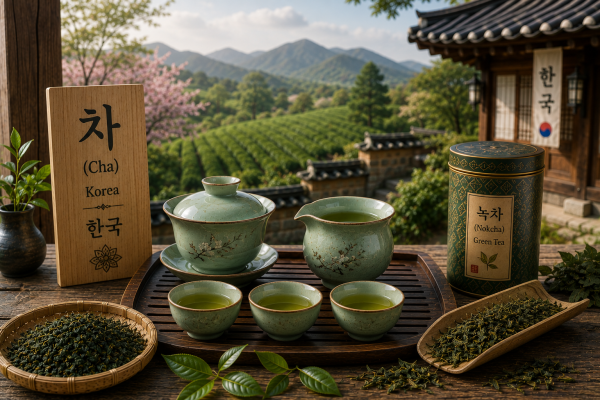
Tea has been part of Korean culture for centuries, influenced by connections with China while gradually developing traditions distinctly its own.
Tea became associated with royal courts, Buddhist temples, ceremonies, and contemplative practices. Although tea culture changed considerably through different periods of Korean history, traditional Korean tea has experienced renewed appreciation alongside the country’s broader interest in preserving cultural heritage.
Tea Tradition
Traditional Korean tea culture emphasizes simplicity, naturalness, and peaceful hospitality.
The Korean tea ceremony, often called Darye (다례), meaning “day tea rite” or tea etiquette, generally places less emphasis on rigid movements than some highly formalized ceremonies. The atmosphere encourages comfortable conversation, appreciation of the tea, and harmony between host, guest, and surroundings.
Signature Teas
녹차 — Nokcha | Green Tea
Traditional Korean green tea, appreciated for its fresh vegetal character and gentle complexity.
발효차 — Balhyocha | Oxidized/Fermented Tea
A distinctive Korean tea style whose processing creates deeper, warmer, and sometimes fruity characteristics.
보성차 — Boseong-cha | Boseong Tea
Tea associated with Boseong, Korea’s best-known tea-growing landscape, particularly celebrated for green tea.
Korea also has a rich tradition of herbal and fruit infusions, although these are not true teas from Camellia sinensis.
Tea Regions
Boseong — Famous for beautiful rolling green tea fields.
Hadong — Historic tea-growing region associated with traditional tea cultivation.
Jeju Island — Volcanic soil and a distinctive island climate support modern premium tea cultivation.
Did You Know?
Hadong is associated with some of Korea’s oldest tea-growing traditions, where tea plants have long grown among mountain landscapes rather than only in perfectly uniform plantation rows.
Experience Korean Tea
Korean tea culture offers a quieter perspective on the world of tea—one shaped by nature, simplicity, hospitality, and thoughtful preparation. From traditional green tea to distinctive oxidized styles, each cup reflects a culture of understated refinement.
Vietnam
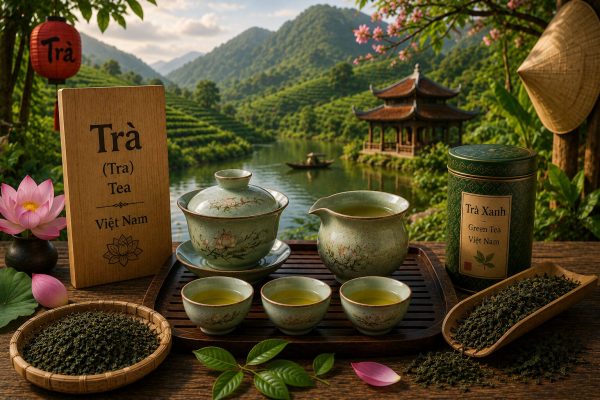
Trà
Ancient Tea Trees & Fragrant Traditions
Origin & History
Vietnam has a long and fascinating relationship with tea. In its northern mountainous regions, ancient tea trees grow among forests and high-altitude communities, while cultivated tea gardens extend across other parts of the country.
Vietnamese tea culture reflects both ancient traditions and everyday simplicity, producing everything from fresh green teas to scented teas and remarkable teas harvested from old mountain trees.
Tea Tradition
Offering tea is a familiar gesture of hospitality in Vietnam. Tea accompanies conversations, family gatherings, celebrations, and moments of quiet reflection.
Green tea is widely enjoyed, while the Vietnamese tradition of scenting tea with fragrant flowers has created some particularly distinctive specialties.
Signature Teas
Trà Xanh | Green Tea
A widely enjoyed style characterized by fresh, vegetal flavours and a refreshing character.
Trà Sen | Lotus Tea
One of Vietnam’s most distinctive specialties, traditionally scented with the fragrance of lotus flowers.
Trà Shan Tuyết | Snow Shan Tea
Produced from old tea trees growing in northern mountainous regions, often recognizable by fine pale hairs on the young leaves.
Trà Nhài | Jasmine Tea
Tea scented with jasmine blossoms, combining the character of tea leaves with an elegant floral fragrance.
Tea Regions
Hà Giang — Known for ancient Shan Tuyết tea trees.
Thái Nguyên — One of Vietnam’s best-known green tea regions.
Yên Bái — Mountainous region associated with old tea trees and traditional production.
Lâm Đồng — Important modern tea-growing region in Vietnam’s Central Highlands.
Did You Know?
Some northern Vietnamese communities harvest tea from old, tall tea trees growing in mountainous environments, rather than from the low, carefully trimmed bushes commonly seen on commercial tea estates.
Experience Vietnamese Tea
Vietnam’s tea heritage brings together ancient mountain trees, fresh green teas, fragrant flowers, and generations of craftsmanship. From lotus-scented tea to teas harvested high in misty mountains, Vietnam offers a tea culture full of discovery.
Morocco
شاي — Shāy
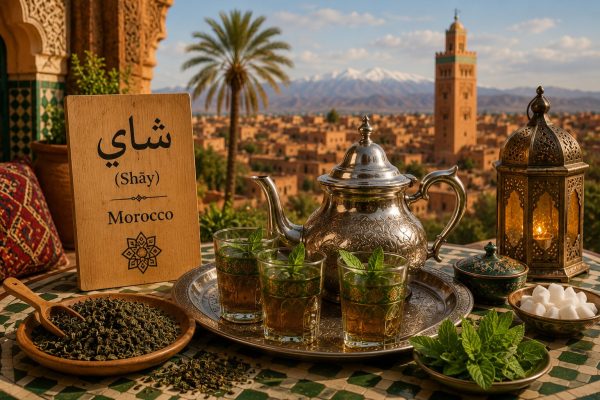
Mint Tea, Generosity & Hospitality
Origin & History
Tea became deeply established in Moroccan culture through international trade, particularly as imported green tea became increasingly available during the nineteenth century.
Moroccans transformed those imported leaves into something distinctly their own by combining green tea—traditionally Chinese gunpowder tea—with fresh mint and sugar.
The result became one of the world’s most recognizable tea traditions.
Tea Tradition
Moroccan mint tea is closely associated with hospitality, generosity, and social connection.
Traditionally prepared in an ornate metal teapot, the tea combines green tea leaves, fresh spearmint, and sugar. It is often poured from above the glass, creating a light layer of foam and turning the serving itself into part of the experience.
Sharing tea with guests is an important gesture of welcome.
Signature Teas
أتاي بالنعناع — Atay bin-Na’na’ | Moroccan Mint Tea
The iconic Moroccan preparation combining green tea, fresh mint, and traditionally sugar.
الشاي الأخضر — Ash-Shāy Al-Akhdar | Green Tea
Gunpowder-style green tea traditionally forms the foundation of Moroccan mint tea.
الشاي بالشيبة — Tea with Sheba/Wormwood
A seasonal variation in which aromatic wormwood may accompany or replace mint, particularly during cooler weather.
Tea Regions
Unlike China or India, Morocco is not primarily known for large-scale cultivation of traditional tea leaves. Its importance to the tea world comes instead from the extraordinary culture it created around preparing and serving imported tea.
Mint and other aromatic herbs grown locally became central to this distinctive tradition.
Did You Know?
The dramatic high pour associated with Moroccan tea is not simply decorative. It can help aerate the tea and contributes to the characteristic foam that is traditionally appreciated when serving it.
Experience Moroccan Tea
Moroccan tea demonstrates beautifully that tea culture is not defined only by where leaves are grown. Through mint, ritual, hospitality, and generations of tradition, Morocco transformed tea into an unmistakable symbol of welcome.
Türkiye
Çay
Tea at the Heart of Everyday Life
Origin & History
Although coffee has a famous place in Ottoman history, tea became enormously popular in Türkiye during the twentieth century as domestic cultivation expanded along the humid Black Sea coast.
Today, tea is an essential part of everyday Turkish life and is served everywhere—from family homes and workplaces to cafés, markets, and shops.
Tea Tradition
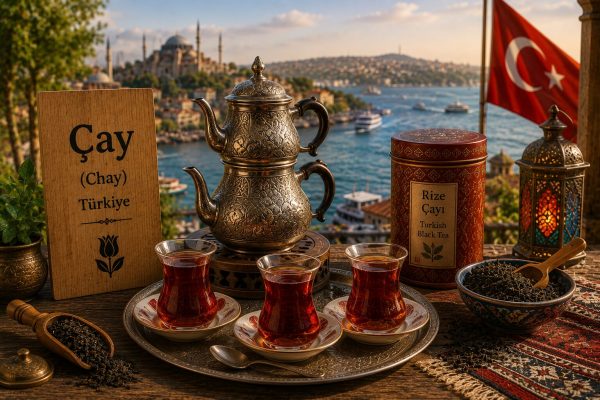
Turkish tea is traditionally prepared using a stacked double kettle called a çaydanlık.
Strong concentrated tea is brewed in the upper pot while water boils below. Each person can then adjust the strength of their tea by combining the concentrate with hot water.
It is famously served in small, curved, tulip-shaped glasses that display the tea’s deep amber-red colour.
Signature Teas
Siyah Çay | Black Tea
The foundation of everyday Turkish tea culture—strong, deeply coloured, and commonly enjoyed throughout the day.
Rize Çayı | Rize Tea
Black tea associated with Rize and Türkiye’s Black Sea tea-growing region.
Elma Çayı | Apple Tea
A fruit-based drink widely associated with Turkish hospitality and tourism, though it is distinct from the traditional black tea consumed daily by many Turkish people.
Tea Regions
Rize — The heart of Turkish tea production.
Trabzon and surrounding eastern Black Sea areas also contribute to tea cultivation.
The region’s humid climate, abundant rainfall, and lush hillsides create suitable conditions for tea growing.
Did You Know?
Türkiye consistently ranks among countries with very high tea consumption per person. Tea is offered so frequently that a small glass of çay is an everyday symbol of conversation and hospitality.
Experience Turkish Tea
From the distinctive silhouette of the çaydanlık to ruby-coloured tea served in tulip glasses, Türkiye has created a tea tradition unmistakably its own—simple, social, generous, and deeply woven into everyday life.
Kenya
Chai — Swahili
From Highland Gardens to the World
Origin & History
Tea cultivation developed commercially in Kenya during the twentieth century, yet the country quickly became one of the world’s most important tea producers and exporters.
Kenya’s equatorial location, rich soils, rainfall, and high-altitude growing regions create favourable conditions for tea cultivation throughout much of the year.
Today, tea supports both large estates and many smallholder farmers and plays an important role in the country’s agricultural economy.
Tea Tradition
In Kenya, chai is part of everyday hospitality and social life.
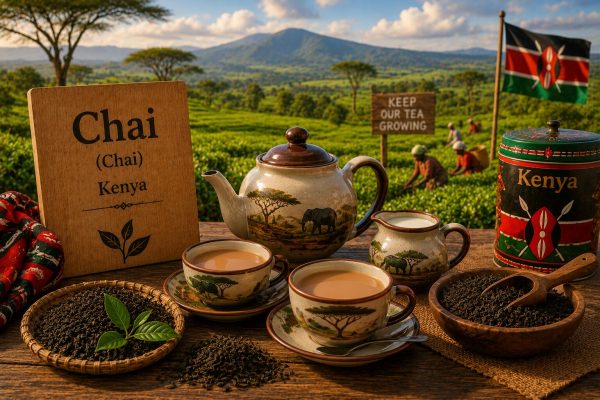
A popular preparation combines strong black tea with milk and often sugar, sometimes with warming spices depending on household and regional preferences.
Tea may be shared at breakfast, during breaks, with visitors, or simply as part of daily conversation.
Signature Teas
Chai | Tea
The common Swahili word for tea and an everyday part of Kenyan life.
Chai Nyeusi | Black Tea
Kenya is particularly famous internationally for strong, bright black teas, many of which are used in blends around the world.
Chai ya Maziwa | Milk Tea
Tea prepared with milk, widely enjoyed in homes and everyday settings.
Purple Tea
A distinctive tea developed from cultivars with naturally purple-toned leaves, associated particularly with Kenyan tea innovation.
Tea Regions
Kericho — Perhaps Kenya’s most famous tea-growing area, known for sweeping highland tea estates.
Nandi — Important high-altitude tea-producing region.
Nyeri and Murang’a — Central Kenyan highlands with significant smallholder tea cultivation.
Kisii — Another important tea-producing area in western Kenya.
Did You Know?
Kenya lies close to the equator, yet many of its tea gardens grow at high elevations where cooler temperatures combine with abundant sunlight and rainfall to create excellent tea-growing conditions.
Experience Kenyan Tea
Kenya represents the modern global story of tea. In little more than a century, its highlands became some of the world’s most important tea-growing landscapes, producing bold black teas enjoyed both locally as chai and in blends served around the globe.
England
Tea
The Timeless Tradition of Afternoon Tea
Origin & History
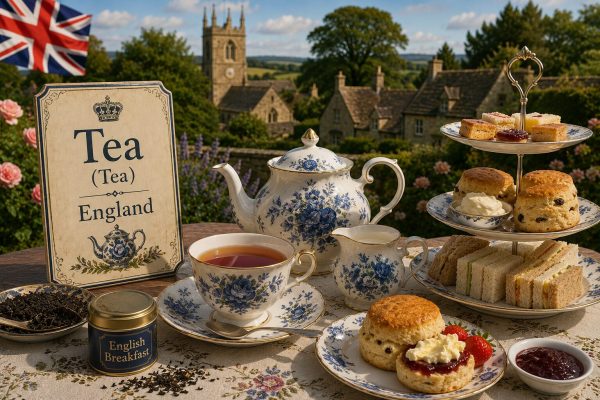
Tea arrived in England in the seventeenth century and gradually became one of the country’s most culturally significant beverages.
Initially an expensive luxury associated with wealthy households, tea became increasingly accessible and eventually found its way into virtually every level of British society.
By the nineteenth century, traditions surrounding breakfast tea and afternoon tea had become enduring parts of British culture.
Tea Tradition
Turkish tea is traditionally prepared using a stacked double kettle called a çaydanlık.
Strong concentrated tea is brewed in the upper pot while water boils below. Each person can then adjust the strength of their tea by combining the concentrate with hot water.
It is famously served in small, curved, tulip-shaped glasses that display the tea’s deep amber-red colour.
Signature Teas
English Breakfast Tea
A robust black tea blend designed to create a rich, satisfying morning cup, commonly enjoyed with milk.
Earl Grey
Black tea traditionally flavoured with the distinctive citrus aroma of bergamot.
Afternoon Tea Blends
Often lighter and more refined than hearty breakfast blends, designed to accompany afternoon foods.
Tea Regions
England does not have the historic large-scale tea-growing regions associated with China, India, or Sri Lanka.
Instead, its influence came through tea importing, blending, trading, and the development of distinctive social traditions surrounding tea.
Did You Know?
Afternoon tea and high tea are not historically the same thing. Afternoon tea developed as a lighter social meal, while “high tea” traditionally referred to a more substantial working-family evening meal served at a higher dining table.
Experience English Tea
From a strong morning brew to an elegant afternoon tea service, England transformed imported tea into traditions recognized around the world. English Breakfast and Earl Grey remain lasting symbols of this enduring relationship with the cup.
South Africa
Tee — Afrikaans
The Remarkable Home of Rooibos
Origin & History
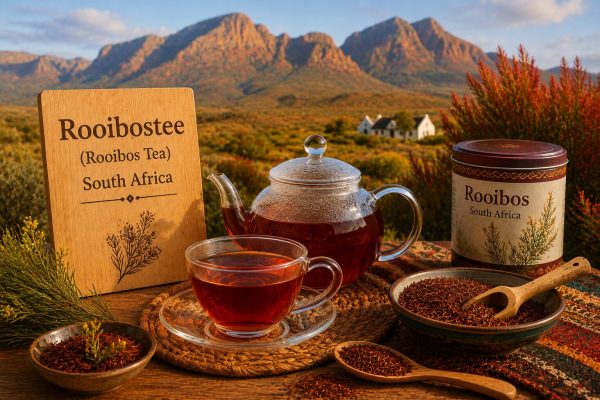
South Africa holds a unique place in global tea culture as the natural home of rooibos, a botanical infusion produced from Aspalathus linearis.
Unlike traditional teas made from Camellia sinensis, rooibos grows naturally in a remarkably limited region of South Africa’s Western Cape, particularly around the Cederberg Mountains.
Indigenous knowledge of the local plant preceded its later commercial development, and rooibos eventually grew into an internationally recognized South African specialty.
Tea Tradition
Rooibos is enjoyed throughout South Africa and around the world for its smooth character and natural lack of caffeine.
It can be served plain, with milk, with lemon or honey, iced, or incorporated into modern blends. Its versatility has allowed a distinctly South African botanical to become part of contemporary tea culture worldwide.
Signature Teas
Rooibostee | Rooibos Tea
Traditional oxidized rooibos develops its characteristic reddish colour and naturally smooth, gently sweet, woody character.
Groen Rooibos | Green Rooibos
Processed to minimize oxidation, resulting in a lighter colour and fresher, more vegetal character.
Heuningbos | Honeybush
Another South African botanical infusion, known for its naturally sweet aroma and honey-like character.
Tea Regions
Cederberg — The heartland of rooibos.
Did You Know?
Authentic rooibos has an extraordinary geographic connection: the plant used to make it is native to a small area of South Africa, making its origin inseparable from the landscape of the Cederberg region.
Experience South African Tea
Rooibos tells a very different story from traditional tea. Born from a unique South African plant and landscape, its naturally caffeine-free character and remarkable versatility have carried a regional botanical tradition into cups around the world.
Tea Tradition at a Glance
Tea may begin with the same leaf, but each culture has developed its own way of preparing, serving, and sharing it. This guide brings the traditions together in one place, making it easy to compare their signature teas, preparation styles, and cultural meaning.
| Country | Signature Tea | Traditional Preparation | Cultural Meaning |
|---|---|---|---|
| China | Green tea, oolong, pu-erh | Gongfu-style brewing with small vessels and repeated infusions | Craftsmanship, appreciation, and connection |
| Japan | Matcha, sencha, gyokuro | Precise preparation with careful attention to water and movement | Harmony, respect, purity, and tranquillity |
| Taiwan | High Mountain Oolong, Dong Ding | Small teapot brewing with multiple short infusions | Aroma, balance, and refined hospitality |
| India | Assam, Darjeeling, Masala Chai | Black tea brewed plain or with milk, spices, and sugar | Warmth, energy, and everyday hospitality |
| Sri Lanka | Ceylon Tea | Black tea brewed in a teapot, often served with milk and sugar | Hospitality and regional heritage |
| Korea | Nokcha, Balhyocha | Gentle brewing in traditional ceramic teaware | Simplicity, nature, and quiet reflection |
| Vietnam | Green tea, Lotus Tea, Shan Tuyết | Green or flower-scented tea prepared for guests and gatherings | Respect, family, and hospitality |
| Morocco | Moroccan Mint Tea | Gunpowder green tea brewed with mint and traditionally sugar | Generosity, welcome, and social connection |
| Türkiye | Rize Black Tea | Strong tea brewed in a double kettle and served in tulip glasses | Conversation and everyday hospitality |
| England | English Breakfast, Earl Grey | Black tea served in cups, often with milk and afternoon foods | Comfort, routine, and social tradition |
| South Africa | Rooibos, Honeybush | Botanical infusion served hot, iced, plain, or with milk | Regional identity and everyday wellness |
| Kenya | Kenyan Black Tea, Milk Tea | Strong black tea often prepared with milk and sugar | Community, hospitality, and daily life |
One Leaf, Many Traditions
Across continents, tea has become far more than a drink. It may be prepared slowly in a ceremonial setting, shared quickly during a busy day, served to welcome a guest, or enjoyed quietly at home. Each tradition reflects the history, landscape, and values of the people who shaped it.
Experience the World of Tea at Majestic
A World of Tea, Gathered in One Collection
Tea traditions may differ from one country to another, but they all begin with the same appreciation for flavour, craftsmanship, and connection.
At Majestic Luxurious Tea, our collection brings together teas and botanical blends inspired by cultures from around the world. From bold black teas and fragrant green teas to mint blends, rooibos, fruit infusions, and comforting chai, each selection offers a different way to experience the world through tea.
